
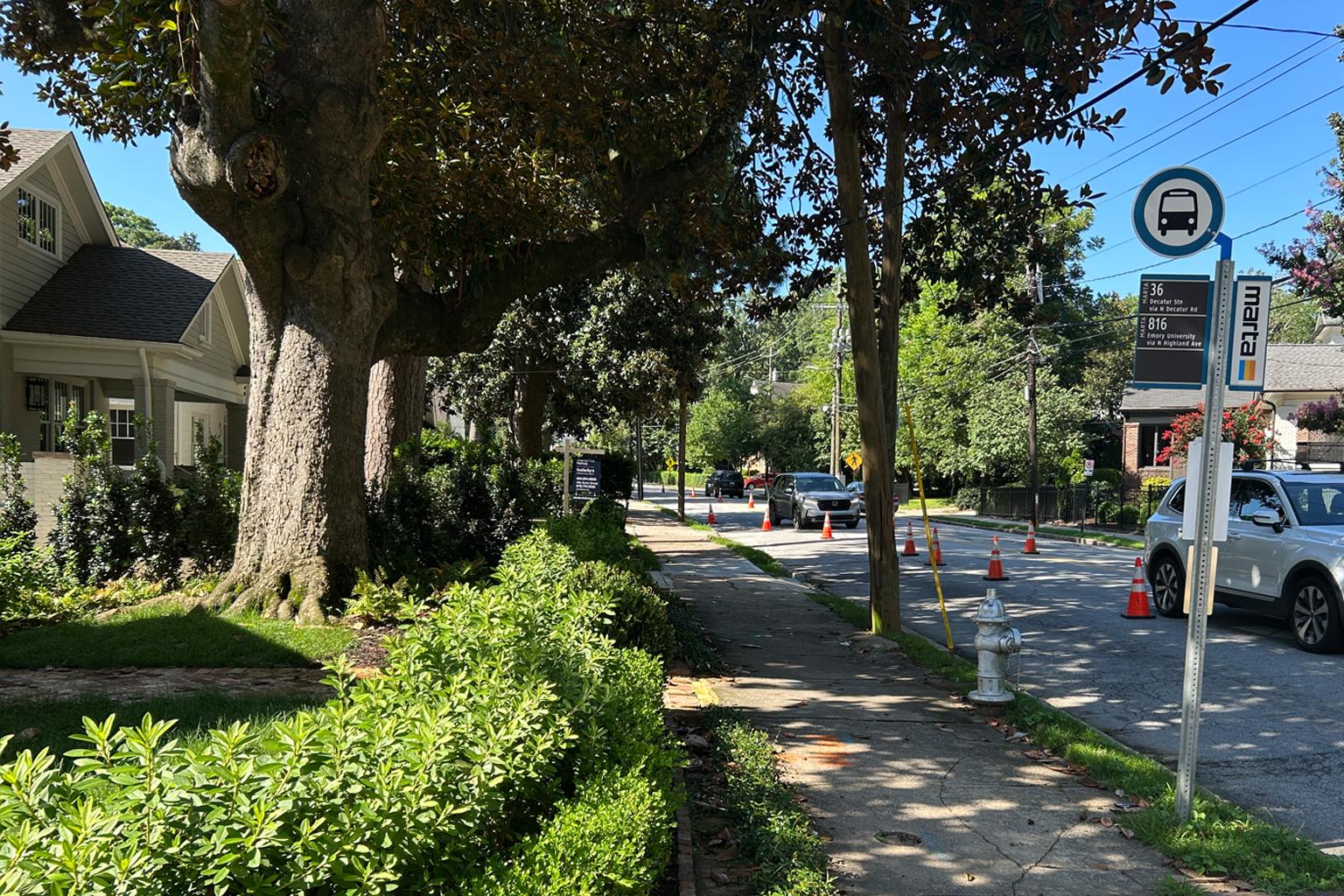
Atlanta has a nickname most cities would envy: the City in a Forest. It's not marketing language. The Atlanta City Council formalized it in ordinance, and the numbers back it up. A 2023 urban tree canopy assessment conducted by Georgia Tech's Center for Urban Resilience and Analytics found that 45.5% of Atlanta's land area is covered by tree canopy, nearly double the national average of approximately 27% for major American cities.
That canopy is what makes intown Atlanta neighborhoods feel the way they do. The deep-wooded lots along Morningside Drive. The century-old oaks lining the streets of Ansley Park. The magnolias in Virginia-Highland that have been growing since the neighborhood was platted in the 1920s. These trees aren't landscaping features. They're the character of the place.
They're also under pressure, and not just from development. A threat most Atlanta homeowners have never considered is working quietly beneath their properties right now, and the traditional solution to that threat can make things significantly worse.
The Financial and Environmental Value of Atlanta's Tree Canopy
The City of Atlanta set a goal in 2023 to reach 50% canopy coverage, up from the current 45.5%, and notably higher than the 47.9% measured in 2008. That decline over 15 years represents real loss: trees that came down and weren't replaced, canopy that narrowed street by street and lot by lot.
Every mature tree that survives is now materially significant to that goal. And Atlanta's revised Tree Protection Ordinance, unanimously adopted by the City Council in June 2025 and effective January 1, 2026, puts real financial weight behind that significance.
Under the revised ordinance, the recompense rate for removing trees without planting replacements is $140 per diameter inch. A single 20-inch oak, the kind found in neighborhoods like Buckhead and Druid Hills that takes 60 or 70 years to reach that diameter, carries a recompense fee of $2,800. Fines for illegal tree removal start at $500 for a first offense and reach up to $200,000 per acre for large-scale violations.
Here is what most homeowners don't realize: traditional open-trench sewer excavation near a mature tree can trigger exactly these financial consequences. A trench through a Critical Root Zone doesn't require cutting the trunk or removing the tree to cause damage severe enough to initiate a slow decline. Under Atlanta's ordinance, a declining tree carries the same financial liability as a removed one. The plumbing bill and the tree ordinance fee can arrive years apart, but both trace back to the same decision.
For Atlanta homeowners with mature trees on their property, this isn't abstract environmental policy. It's financial exposure attached to every large tree on their land.
The Irony Every Homeowner Should Know
 Here is the problem hiding in plain sight beneath Atlanta's intown neighborhoods: the same trees that define these streets are the trees most likely to be destroying the sewer lines beneath them.
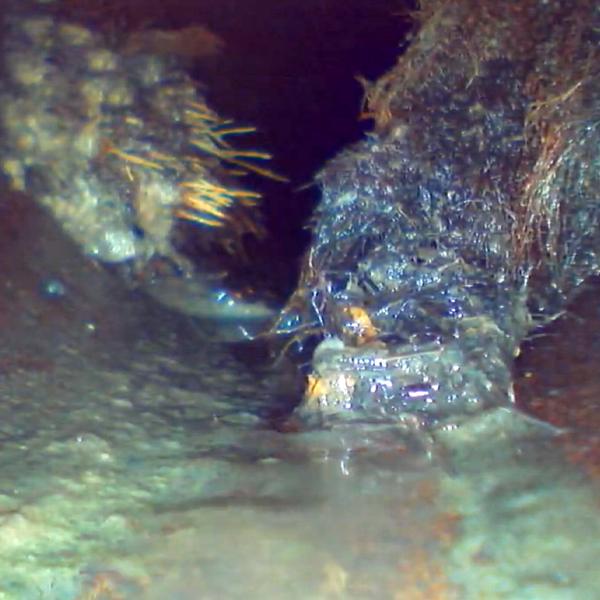
Tree roots seek water and nutrients. Aging sewer pipes, the clay tile, cast iron, and Orangeburg systems that serve most homes built before 1970, develop hairline cracks and loosening joints over decades. Those openings leak the constant moisture, oxygen, and organic material that roots are designed to find. Fine root filaments, thin as thread, enter through cracks as small as a pinhole. Inside the pipe, conditions are ideal: constant moisture, warmth, nutrients with every flush. Those filaments establish, thicken, and grow.
Research published in the Journal of Infrastructure Systems and cited extensively by subsequent peer-reviewed work attributes more than 50% of sewer blockages globally to tree root intrusion. A survey of municipalities in Denmark found that 97% of surveyed towns and cities had experienced root intrusion events. Pipes constructed before 1970, the predominant pipe age in Atlanta's intown neighborhoods, show root intrusion rates of 6 to 11 events per 1,000 meters of pipe, compared to approximately 2 per 1,000 meters for post-1970 construction.
The progression is predictable. In Stage 1, fine filaments enter through hairline cracks. The pipe is still largely open, but every flush deposits debris against the root mass. In Stage 2, a dense fibrous root mass fills 40 to 60% or more of the pipe diameter. Drains slow at every fixture. The homeowner notices but doesn't yet know why. In Stage 3, severe intrusion narrows the passage to a trickle or blocks it completely. Sewage stands in the lowest fixtures. The gurgling begins.
And the irony is this: the tree caused the plumbing problem. The traditional solution, excavation, then damages or destroys the tree. The homeowner loses both ways.
What Traditional Excavation Does to a Root Zone
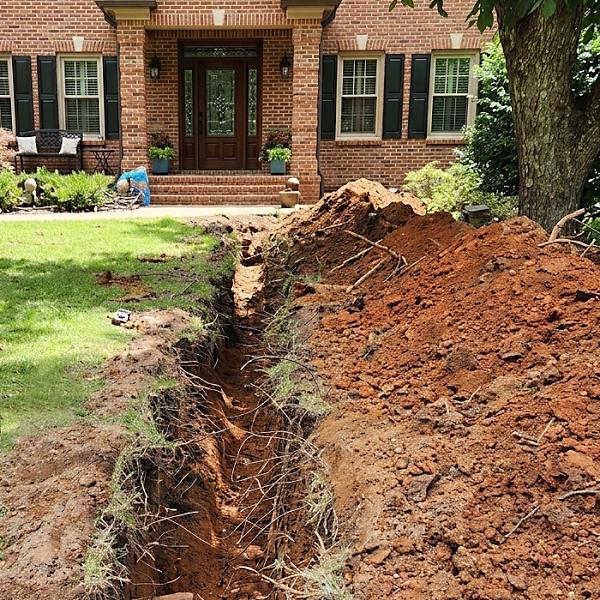 A residential sewer lateral, the pipe running from the home's foundation to the city connection, typically spans 30 to 80 feet. Traditional sewer line replacement requires a trench 4 to 6 feet deep across that entire run. Any tree whose root system intersects that path has its feeder roots severed.
Arborists use the term Critical Root Zone (CRZ) to describe the area of soil most essential to a tree's health and stability. The ISA (International Society of Arboriculture) defines the CRZ using a formula based on the tree's diameter at breast height (DBH, measured at 4.5 feet from the base): the radius of the protected zone equals the trunk diameter in inches multiplied by 1.5 feet. For a mature oak with a 24-inch trunk diameter, the Critical Root Zone extends 36 feet in every direction from the base.
ANSI A300 standards, the arboricultural industry's established guidelines for tree care, do not permit trenching through a tree's Critical Root Zone under normal circumstances. The feeder roots within that zone are responsible for water and nutrient absorption. Severing them doesn't kill the tree immediately. It initiates a decline that plays out over one to five years, often longer, as the tree slowly loses its ability to sustain itself.
The damage is invisible and delayed. A homeowner whose sewer line was replaced by traditional excavation five years ago may be watching a beloved oak decline today without ever connecting the two events. Under Atlanta's revised Tree Protection Ordinance, that declining tree, now worth $140 per diameter inch in recompense fees, represents real financial liability attached to a decision made years earlier. And unlike the plumbing invoice, this bill isn't optional.
What Pipe Bursting Does Instead
Pipe bursting requires two small access points, one near the home's foundation, one at the city tap connection. Through those two openings, a bursting head travels through the existing pipe path beneath the root zone. The old pipe is fractured outward. New, seamless HDPE pipe is pulled through behind it simultaneously.
The bursting head never breaks the surface. It never cuts through soil. It never approaches a feeder root. The Critical Root Zone above the pipe path is entirely undisturbed.
The result is brand-new pipe, seamless, root-proof, jointless, with a proven 75 to 100 year lifespan and a 20-year comprehensive warranty. The work aligns directly with what ISA-certified arborists recommend when utility work must be performed near protected trees: trenchless installation methods that preserve the Critical Root Zone rather than trench through it.
The tree never knows the work happened below it.
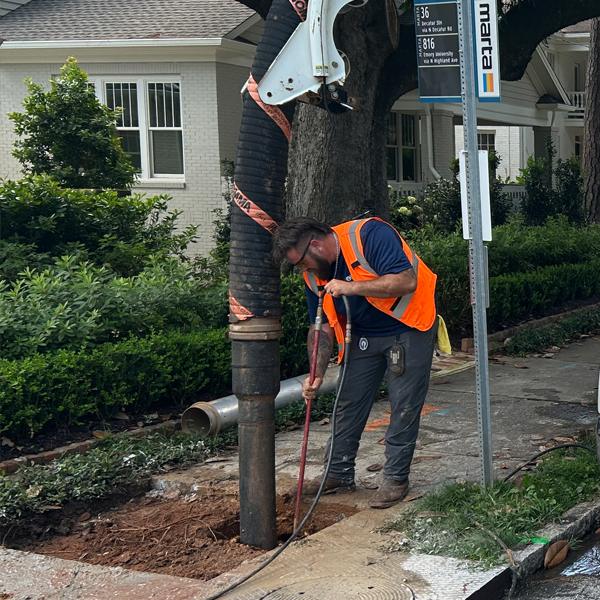 One of the only Atlanta-based plumbers offering true pipe bursting technology alongside precision CIPP lining, Morningside Plumbing brings both trenchless tools to every sewer line evaluation, with the diagnostic expertise to determine which one a given situation requires. Every evaluation begins with a video camera inspection that shows exactly what's happening inside the pipe before any recommendation is made.
What This Means for Atlanta Homeowners With Mature Trees
If you have received a traditional excavation quote for sewer work, or if you've been told your sewer line needs replacement and you have mature trees on your property, the question worth asking is whether your plumber offers pipe bursting as an alternative.
The answer matters more than most homeowners realize. A sewer line replaced by excavation through a mature root zone may solve the plumbing problem while initiating a slow-motion loss of trees that took decades to grow. Under Atlanta's current tree ordinance, that loss carries financial consequences that extend well beyond the cost of the plumbing work itself.
Morningside Plumbing's Underground Arsenal was built for exactly this situation: properties where the work underground must protect what's above it. From the initial camera inspection that reveals root intrusion in its early stages, to pipe bursting that replaces the line without touching a feeder root, to precision CIPP lining for targeted repairs, every tool in the Arsenal is designed to solve the plumbing problem while leaving the landscape intact.
If your ISA-certified arborist has expressed concern about the impact of sewer work on a protected tree on your property, that concern is valid. Trenchless pipe bursting is the answer they're looking for, and Morningside Plumbing is the team to call.
Atlanta's trees took generations to become what they are. The plumbing work that preserves them is available. One trenchless sewer line replacement at a time.
We protect what's above ground while fixing what's below. If your property has mature trees and you're dealing with sewer line issues, or if you want to understand the condition of your sewer lateral before a problem develops, call 404.873.1881 or schedule a camera inspection online.