
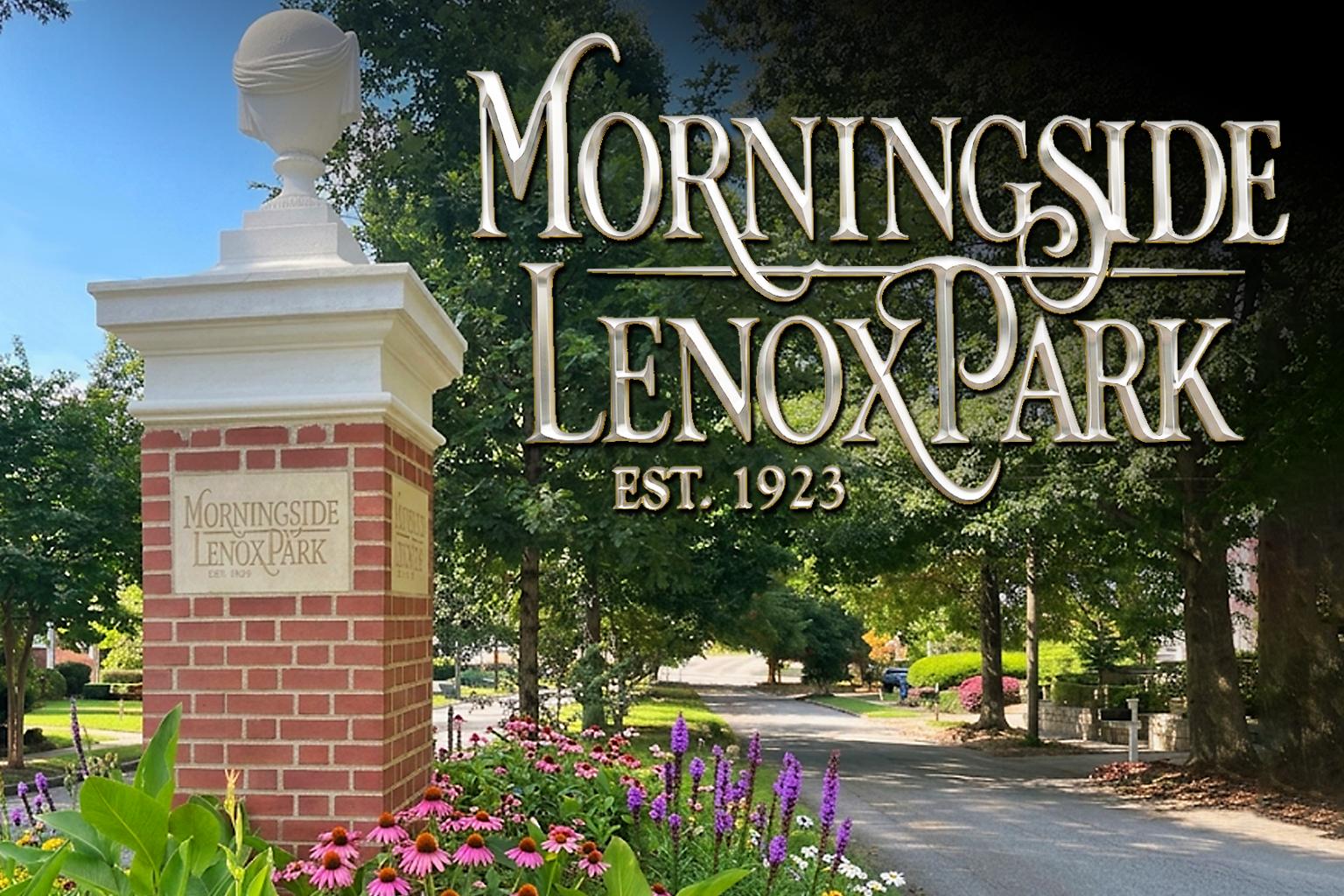
Morningside is one of those Atlanta neighborhoods that earns its reputation quietly. The Craftsman bungalows along Springdale Road, the Tudor Revivals with their steeply pitched rooflines and detailed stonework, and the deep wooded lots that make the neighborhood feel like it exists slightly outside of time all reflect the careful development that began in 1923, when James R. Smith and M.S. Rankin marketed this stretch of intown Atlanta as a new kind of suburb. Morningside's residents have always known what they have. They fought to keep it in the 1960s and 70s, when the MLPA won a federal court injunction halting Interstate 485 and ultimately convinced the state to abandon the project entirely (a victory that changed not just this neighborhood, but how Atlanta thinks about community planning).
 What Morningside homeowners cannot see is equally defining: the plumbing infrastructure beneath these homes, much of it original, serving houses now approaching or past their centennial.
Since 1975, Morningside Plumbing has provided plumbing services to this neighborhood: sewer line repair and replacement, water heater installation, emergency plumbing, and the trenchless underground work that protects what makes Morningside special.
"Out of sight, out of mind" is how Paul Wimpey, owner of Morningside Plumbing, describes the central challenge facing owners of historic homes. The systems that matter most (the underground service lines, the sewer laterals, and the supply lines inside walls and beneath concrete subfloors) are precisely the ones that receive the least attention until something goes wrong. By then, options narrow and costs rise.
Morningside Plumbing has been working in this neighborhood since 1975. Here is what five decades of that work has taught us.
What Is Actually Happening Beneath Morningside's Foundations
Morningside's homes were built to last. The craftsmanship in a 1928 Tudor Revival or a 1935 Craftsman bungalow is genuinely superior to most modern construction. However, the plumbing systems that serve those homes were built with materials and techniques that have a finite lifespan, and many are now at or past it.
The pipe materials tell the story by era:
- Galvanized Steel (Pre-1960): Homes built before 1960 typically have galvanized steel supply lines. Galvanized pipe rusts from the inside out, gradually narrowing the channel through which water flows. The rust particles discolor water (that orange tinge from a tap that has not been run in a while is a characteristic symptom). Flow rate drops, and water pressure at fixtures diminishes. In Morningside's oldest homes, galvanized supply lines are approaching or past their useful life.
- Cast Iron (Pre-1980): Drain and waste lines in homes built before 1980 are typically cast iron. Cast iron deteriorates differently: moisture, grease, and the chemistry of everyday waste cause the bottom of the pipe to rust away gradually. Eventually, what remains is a channel running through a compromised shell. It works until it does not.
- Orangeburg Pipe (1940s‚ 1970s): The sewer lateral (the pipe connecting the home to the city main) is the most consequential and most overlooked piece of infrastructure in a Morningside home. Homes built during this era often have Orangeburg pipe in this position. Made of compressed wood fiber and pitch, it was intended as a temporary solution and has now been in the ground for 50 or 60 years. Orangeburg softens, deforms, and eventually collapses. Finding it during a camera inspection in a Morningside home is not unusual.
Tudor Revival homes add another layer of complexity. Many feature concrete subfloors poured over joists rather than wood plank, which means relocating floor drains or waste lines requires jackhammering through concrete. The plaster-and-lath walls common throughout the neighborhood transmit vibrations differently than modern drywall; drilling for pipe work without the right technique and tooling can shatter plaster keys and collapse wall sections. These are not generic plumbing challenges. They are specifically Morningside challenges, and they require plumbers who understand them.
The Tree Canopy Challenge
 Morningside's tree canopy is extraordinary: dense, mature, and inseparable from the neighborhood's character. It is also one of the most significant drivers of sewer line failure in the area.
Tree roots seek water. In a neighborhood where aging clay tile and cast iron sewer laterals develop cracks and separations over decades, those cracks act as beacons. Root systems find the openings, enter the pipe, and grow. In early stages, roots create partial blockages that cause recurring slow drains. As they establish, they cause structural damage to the pipe itself. In Morningside's oldest homes, root intrusion into the sewer lateral is not a risk; it is a near-certainty.
Georgia red clay compounds the problem. The soil expands when wet and contracts when dry, exerting seasonal pressure on underground pipes. On a deep wooded lot with significant root density, soil behavior varies considerably from one area of a property to another. A pipe that is structurally intact on one end of a run may be compromised on the other.
Morningside's local hydrology connects to the Peachtree Creek watershed. Portions of the underlying wastewater network operate as a combined sewer system where stormwater and sewage share the same pipes. During heavy rain events, that system can be overwhelmed. The combination of aging private sewer laterals and a challenged public system creates conditions where problems can develop faster than homeowners expect.
Deep Utility Work: The Lutheran Church on Ponce de Leon Avenue
About 15 years ago, Morningside Plumbing replaced the sewer line for a Lutheran church on Ponce de Leon Avenue, just outside Morningside's formal boundaries but part of the neighborhood's fabric.
It was one of the most technically demanding projects we had undertaken. The sewer line ran 15 to 16 feet below grade. Maintaining a gravity-fed system was non-negotiable; a pump was not an option. That depth required extensive excavation, trench boxes to protect workers, and a job that ultimately took nearly two weeks to complete. A large portion of the landscaping was destroyed in the process.
"If today's trenchless technologies had been available at that time," Paul Wimpey reflects, "we could have completed much of the work with a fraction of the excavation."
Worker safety has always been Morningside Plumbing's highest priority. The trench boxes were not optional; they were mandatory, and using them correctly added time and complexity to an already demanding job. That commitment does not change. What has changed is how often we need to make that choice.
If you are concerned about the condition of your home's underground plumbing, a camera inspection is the right first step. Call 404.873.1881 or schedule online.
Modern Underground Solutions: Matching the Tool to the Task
The contrast between open excavation and what is possible today represents one of the most significant shifts in plumbing practice in a generation.
Morningside Plumbing's trenchless technology capabilities are built around methods that repair or replace underground pipe through small access points rather than open trenches across yards, driveways, hardscaping, and root systems. Because no two properties or pipe conditions are identical, having the expertise to deploy the right trenchless method for the specific situation is essential.
Pipe Bursting Technology
When a sewer lateral is severely crushed, collapsed, or heavily compromised by root intrusion, full replacement is required. Pipe bursting accomplishes this without tearing up the property. A bursting head fractures the old pipe from within while simultaneously pulling new, seamless High-Density Polyethylene (HDPE) pipe into place. The result is a root-proof, jointless replacement line with a 75-to-100-year lifespan and a 20-year comprehensive warranty, installed through two small access points with your landscaping and hardscaping intact when the work is done.
Precision CIPP Lining
For single compromised sections of an otherwise sound line, shallow interior pipes under concrete slabs (less than 20 inches of depth), or vertical pipes within walls where demolition would be costly, Cured-In-Place Pipe (CIPP) lining offers an ideal solution. CIPP creates a structurally sound resin pipe within the existing line, providing the same 20-year warranty and long lifespan without excavation.
By offering both true pipe bursting technology and precision CIPP lining, Morningside Plumbing brings complete technical diagnostic capability to every evaluation. For Morningside homeowners with mature trees, custom hardscaping, and century-old landscaping, this approach delivers a fundamentally higher standard of property protection.
Video sewer camera inspection makes it all possible. Before making any recommendation (whether for pipe bursting, CIPP lining, hydro jetting, or spot repair), we run a high-definition camera through the line. What the camera shows determines what we recommend. No guesswork, no assumptions, and no unnecessary work.
Pressure Reducing Valves: The Heartbeat of Historic Plumbing Systems
Ask a Morningside homeowner about their plumbing system, and most can tell you the age of their water heater and whether they have had any significant leaks. Very few know whether they have a pressure reducing valve, or whether it is working.
Paul Wimpey calls the PRV "the heartbeat of a home's plumbing system." It is not a dramatic description; it is accurate. The PRV regulates the pressure at which water enters a home from the city main. When it is working correctly, it is invisible. When it fails, the consequences cascade through the entire system.
Excessive water pressure shortens the life of water heaters and tankless systems. It causes faucets and toilets to leak or run continuously. It stresses supply line connections and appliance fittings throughout the house. In a home where the PRV has been quietly failing, a homeowner may experience a pattern of seemingly unrelated plumbing issues (a running toilet here, a dripping faucet there, a water heater that seemed to fail prematurely) without connecting them to a single underlying cause.
A PRV inspection is a routine part of a plumbing system evaluation. In a Morningside home, where city supply pressure can be significant and the plumbing infrastructure is aging, it is a particularly valuable check.
What a Proactive Inspection Involves
The Morningside Care Club was built around a simple observation: the homeowners who have the most options are the ones who know the condition of their systems before problems occur.
A plumbing inspection in a home of Morningside's age covers:
- The Supply System: Water pressure, PRV function, supply line condition, and signs of galvanized deterioration.
- Water Heating Systems: Age, condition, expansion tank, T&P valve operation, and flushing history.
- Drain and Waste Lines: Flow rate and signs of cast iron deterioration.
- The Sewer Lateral: Camera inspection or assessment based on known pipe history.
- Moisture Testing: Visible signs of leaks at supply connections, under sinks, and in the basement or crawl space.
What the inspection produces is information. When cast iron drain lines show early signs of wear, a homeowner who knows that has time to plan. When the sewer lateral camera shows early root intrusion, a homeowner can schedule a jetting service before it becomes a backup. When the PRV shows pressure out of range, replacing it is a relatively simple repair before it causes an expensive pattern of fixture failures.
The difference between catching a problem early and catching it after it has caused damage is almost always measured in thousands of dollars. In Morningside's historic homes, where original materials cannot simply be replaced, it can also preserve historic architectural features.
Specialized Plumbing Services for Morningside Homes
Morningside Plumbing has been the neighborhood's plumber since before most of these homes had their first major renovation. The calls we receive most often from homes of this age and construction involve:
- Sewer lateral evaluation, trenchless pipe bursting, and CIPP lining
- Cast iron drain line replacement and galvanized supply line repiping
- Water heater replacement, including Navien-certified tankless installations
- PRV inspection and replacement
- Specialized plumbing rough-ins tied to kitchen expansions, bathroom remodels, and second-story additions transforming the neighborhood from within
If you are searching for plumbing services in Morningside and want a team that understands what is actually beneath your home (not just what is typical for a house this age, but what is specific to this neighborhood, this soil, these trees, and this construction), we are here to help.
"Our goal has never been to simply sell a repair," says Paul Wimpey. "Our responsibility is to educate homeowners so they understand the condition of the plumbing systems that serve their homes."
That philosophy has been consistent since 1975. Morningside Plumbing serves the neighborhood that gave us our name, and we take that seriously.
General Plumbing Services for Morningside's Historic Homes
Not every plumbing call in Morningside involves a sewer lateral or a failing supply line. The everyday work matters too — and in homes of this age, even routine repairs require a plumber who understands what they're working with.
The most common general plumbing calls we receive from Morningside homeowners involve aging fixture hardware that no longer shuts off cleanly, toilet flappers and fill valves worn out by decades of use, garbage disposals that have reached the end of their service life, and faucets that drip not because of a simple washer but because the valve seat itself has corroded. In a home with original plaster walls and period tile, replacing a fixture isn't just a plumbing job — it's a preservation decision. We treat it that way.
Kitchen and bathroom remodels in Morningside frequently uncover surprises: galvanized supply lines that need full repiping before new fixtures can be installed, cast iron drain lines that won't accept modern fittings without adaptation, and concrete subfloors that require careful jackhammering to relocate drains. These aren't obstacles — they're the kind of work we've been doing in this neighborhood for more than 50 years.
Water Heaters in Morningside Homes
Morningside's oldest homes were built long before tankless water heaters existed. Many still run on aging tank-type systems tucked into basement utility rooms or closets — systems that have been quietly losing efficiency for years.
Water heater replacement is one of the most common calls we receive from Morningside homeowners, and it's rarely as simple as swapping one tank for another. The PRV condition we discussed earlier directly affects water heater lifespan. Excessive pressure stresses the tank, forces the T&P valve to work harder, and can cut years off a system's useful life. Before recommending a replacement unit, we assess the full system.
For homeowners considering a tankless upgrade, Morningside's historic homes present specific installation considerations. Tankless systems require significantly higher gas line capacity than traditional tanks — which often means upgrading the gas line from the meter. They also require dedicated venting that differs from conventional tank venting. Done correctly, the result is endless hot water, meaningful energy savings, and a system that will outlast the home's next renovation cycle.
As Navien-certified specialists, we install, service, and maintain the most efficient condensing tankless systems available. Navien's ComfortFlow technology eliminates the cold water sandwich effect that plagues lesser tankless installations — a particular benefit in Morningside's larger homes where pipe runs from the water heater to distant bathrooms can be significant.
Frequently Asked Questions
Common questions about plumbing services in the Morningside and Lenox Park neighborhoods of Atlanta.
What plumber serves the Morningside and Lenox Park neighborhoods of Atlanta?
Morningside Plumbing has served the Morningside and Lenox Park neighborhoods since 1975 — more than 50 years of continuous service to the community that gave us our name. Our office is located at 2175 Piedmont Rd NE, less than a mile from the neighborhood's northern boundary.
How do I know if my Morningside home has Orangeburg pipe?
If your home was built between the 1940s and early 1970s and you've never had a sewer camera inspection, there's a meaningful chance your sewer lateral contains Orangeburg pipe. The only reliable way to confirm it is a video camera inspection. Orangeburg doesn't always fail dramatically — it softens and deforms gradually, which is why many homeowners don't discover it until a backup occurs or a real estate inspection flags it.
What are the signs that a Morningside home needs sewer line repair?
Recurring slow drains throughout the house, gurgling sounds when water drains, sewage odors in the yard or basement, and wet patches of unusually lush grass over the sewer line path are all warning signs. In Morningside's oldest homes, these symptoms often indicate root intrusion or Orangeburg collapse rather than a simple clog.
Does Morningside Plumbing offer tankless water heater installation?
Yes. As Navien-certified specialists, we install, service, and maintain condensing tankless water heaters in Morningside homes. We assess your home's gas line capacity, venting requirements, and hot water demand before making a recommendation.
What is the Morningside Care Club?
The Morningside Care Club is our preventive maintenance membership program. Members receive bi-annual plumbing inspections, priority scheduling, and discounts on services. For owners of Morningside's historic homes, it's designed to catch developing issues — deteriorating cast iron, early root intrusion, PRV failure — before they become expensive emergencies.
Can you replace a sewer line without destroying my landscaping?
In most cases, yes. Our pipe bursting technology replaces the full sewer lateral through two small access points, leaving your yard, hardscaping, and mature trees intact. For partial repairs, CIPP lining restores the damaged section without any excavation. A camera inspection determines which approach your situation requires.
How do I schedule a plumbing inspection in Morningside?
Call 404.873.1881 or schedule online at morningsideplumbing.com. We serve Morningside, Lenox Park, Virginia-Highland, Ansley Park, Midtown, Buckhead, and surrounding intown Atlanta neighborhoods.
Morningside Plumbing has served intown Atlanta neighborhoods‚ Virginia-Highland, Morningside, Lenox Park, Ansley Park, Buckhead, Midtown, and beyond‚ since 1975.