
Old homes with old bones. It's a phrase that captures something most plumbing companies never have to think about — the specific, irreplaceable quality of a house that was built before the 20th century began, maintained across a dozen ownership changes, and is still standing because the people who built it knew what they were doing.
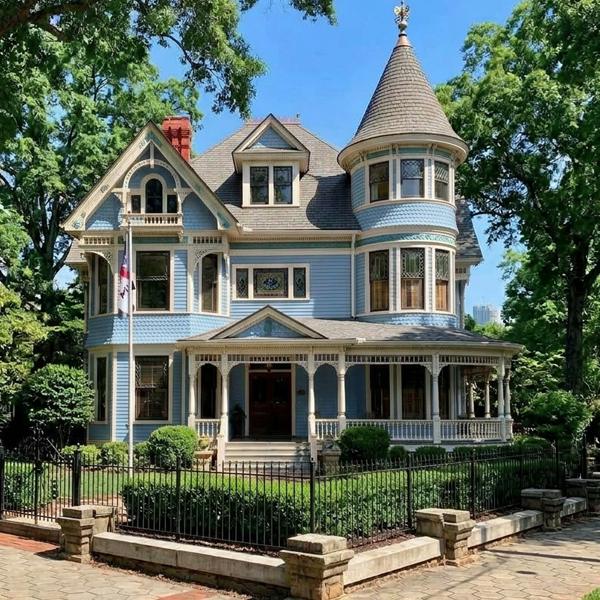 Inman Park was Atlanta's first planned suburb, developed beginning in 1887 by Joel Hurt as a streetcar community east of downtown. The neighborhood has been listed on the National Register of Historic Places since 1973. The Victorian mansions along Edgewood Avenue, the Queen Anne cottages with their wraparound porches and ornamental millwork, the early Craftsman bungalows that arrived as the neighborhood aged into the early 20th century — this is some of the finest residential architecture in the Southeast.
The people who live here know it. They chose it. And most of them understand that maintaining a home of this age and character requires a different standard of care than a suburban tract house built last decade.
What they may not know — what almost nobody knows until something forces the conversation — is what's happening underground.
What These Homes Were Built On
Inman Park's oldest homes predate the plumbing materials that most homeowners think of as "old." The galvanized steel supply lines and cast-iron drain lines that create headaches in 1940s and 1950s homes represent a later era. The Victorian-era homes that define Inman Park's character were built with even earlier materials: wrought iron supply lines, lead joints, clay tile sewer laterals installed when the neighborhood's infrastructure was first laid in the 1880s and 1890s.
The construction method adds its own layer of complexity. Inman Park's oldest homes use balloon-frame construction, where continuous stud bays run from the foundation sill to the roof plate without the floor platforms that give modern contractors natural access points.
Running updated plumbing through these structures requires navigating tight, uninterrupted cavities without disturbing original plaster, decorative ceilings, or the millwork that defines these homes' character. There are no easy routes. Every repair is a puzzle.
By the time Inman Park's housing stock reached the mid-20th century, the neighborhood had experienced a period of decline followed by one of Atlanta's earliest and most committed preservation efforts. Homeowners who moved in during the 1970s and 1980s bought beautiful shells and rebuilt them. The plumbing they installed during those renovations — galvanized supply lines, cast iron drain lines, Orangeburg or clay tile sewer laterals — is now itself approaching the end of its useful life.
The result is a neighborhood where multiple generations of infrastructure exist beneath the same property. An Inman Park home might have a Victorian-era foundation, Depression-era sewer lateral, postwar supply lines, and a water heater installed during the Carter administration. Each system on its own timeline. Each approaching its limits in its own way.
The Puzzle These Homes Present
Earlier this year, Morningside Plumbing completed a trenchless sewer replacement at a historic condominium building in Inman Park, originally constructed as a boarding house in the 1930s. The sewer line had deteriorated past the point where lining was an option. What one of the building's residents wrote afterward captures the job better than any description we could offer.
"If you've got an old home with old bones, Morningside Plumbing is the team you want. Our historic condo with some original cast iron pipes hit a major outtake plumbing problem, and Paul and his crew treated it like the puzzle it was. They took time to diagnose it before reaching for a shovel and looked for the least invasive fix. When our hoped-for hydro liner wasn't possible because the pipe was too far gone, they pivoted to pipe bursting — running a new 40-foot line without tearing up our driveway."
The pivot matters. A plumber working from a script rather than a diagnosis would have arrived with CIPP lining as the plan — it's less invasive, it's faster, and in many situations it's exactly the right call. But when the camera showed a pipe too far deteriorated to accept a liner, the right call changed. Pipe bursting replaced the full 40-foot run without excavating the driveway, without disrupting the property above, and without the kind of exploratory damage that "reaching for a shovel" would have caused.
That diagnostic-first approach isn't incidental to working in Inman Park. It's essential. In a neighborhood where the infrastructure beneath a home might span a century of materials and methods, the plumber who arrives with a predetermined answer is the one most likely to create problems.
The same resident noted something else worth highlighting: "It also helped that they own their equipment instead of subleasing, which meant fewer surprises and less additional expense."
Equipment ownership is the difference between a company that controls its own diagnostic and mechanical capabilities and one that depends on rental availability, unfamiliar operators, and markup costs that get passed to the homeowner. When Morningside Plumbing's Underground Arsenal deploys to a job — pipe bursting rigs, hydro vac excavators, high-capacity hydro jetters, sewer camera systems — that equipment is owned, maintained, and operated by the same technicians who arrive at the door. No rental yards. No surprises.
A second resident from the same building said simply: "Morningside Plumbing recently completed a trenchless repair for a damaged underground pipe at our historic condo building. Incredible knowledge and skill, and well-equipped to tackle a tough job."
If your Inman Park home is showing signs of sewer line trouble — recurring slow drains, gurgling sounds, or a lateral that hasn't been inspected in years — a camera inspection is the right first step. Call 404.873.1881 or schedule online.
What the Camera Finds
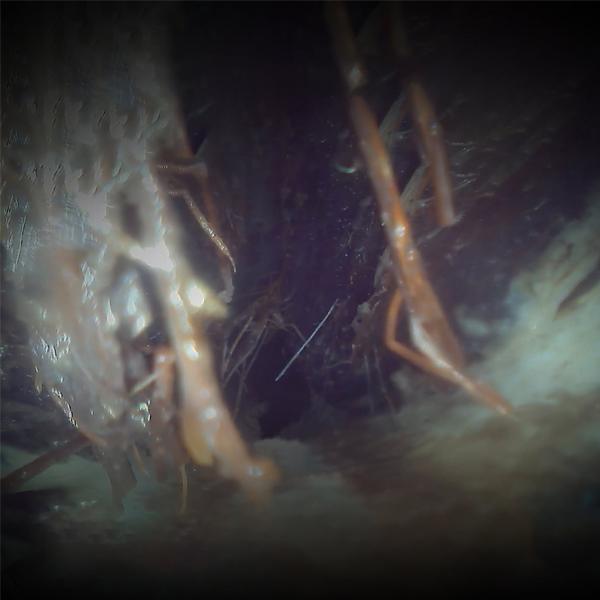 The sewer lateral beneath an Inman Park property carries every bit of the neighborhood's history in its material and condition. Clay tile laterals from the late 19th century — still present beneath some of the oldest homes — have been accumulating root intrusion for generations. The joints between clay sections loosen over time, creating precisely the kind of openings that tree roots are designed to find.
Inman Park's urban tree canopy compounds this. The neighborhood's mature oaks and magnolias have had decades to establish root systems that follow moisture wherever it leads. Research consistently attributes more than half of all sewer line blockages to tree root intrusion, and in a neighborhood where century-old trees and century-old pipes occupy the same soil, that relationship plays out reliably.
Cast iron drain lines show a different pattern. Moisture, organic material, and the chemistry of decades of use cause the pipe's interior to corrode from the inside out, gradually narrowing the usable channel until flow is restricted and backups become routine.
A video camera inspection is the only way to know which situation you're actually dealing with. Without it, any recommendation — lining, pipe bursting, jetting, or replacement — is a guess. Morningside Plumbing doesn't make guesses about Inman Park's infrastructure. The condo project began with a thorough diagnosis, which is why the team knew the lining option was off the table before any work began.
The Tree Protection Dimension
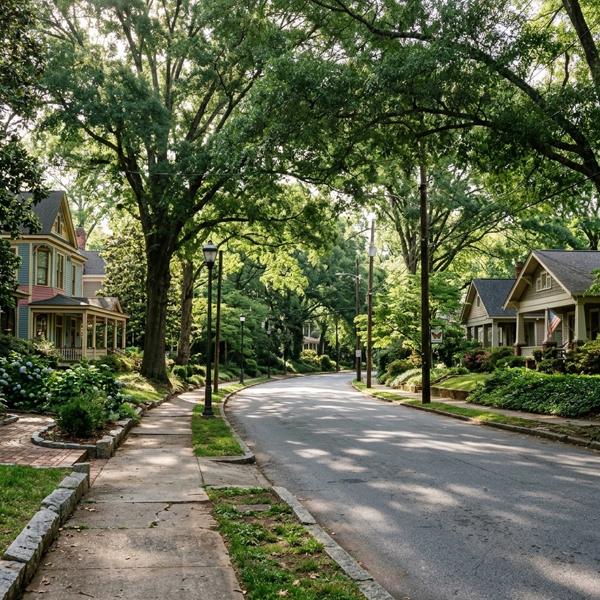 For Inman Park homeowners with mature trees on their property, the intersection of sewer line work and Atlanta's tree canopy is more than an aesthetic concern. Under Atlanta's revised Tree Protection Ordinance, a 20-inch oak carries a recompense fee of $2,800 if damaged or removed. For properties with multiple established trees — not uncommon in Inman Park's leafy lots — traditional excavation along a sewer lateral can trigger fees and tree loss that far exceed the cost of the plumbing work itself.
The Urban Forest post on this site covers this in detail. The short version: pipe bursting travels through the existing pipe path beneath the root zone, fracturing the old line from within while drawing new HDPE pipe through behind it. Two small access points. No trench. The trees that define Inman Park's character never know the work happened below them.
For situations where full replacement isn't warranted, precision CIPP lining restores targeted sections of an otherwise sound line. The condo project demonstrated exactly when that calculus shifts: when the pipe is too far deteriorated to accept a liner, trenchless pipe bursting becomes the right answer. What makes Morningside Plumbing unusual is that both tools are available, and the expertise to know which one a given situation requires comes from the diagnostic work, not from the service the crew happens to have loaded on the truck.
Plumbing Services for Inman Park's Historic Homes and Buildings
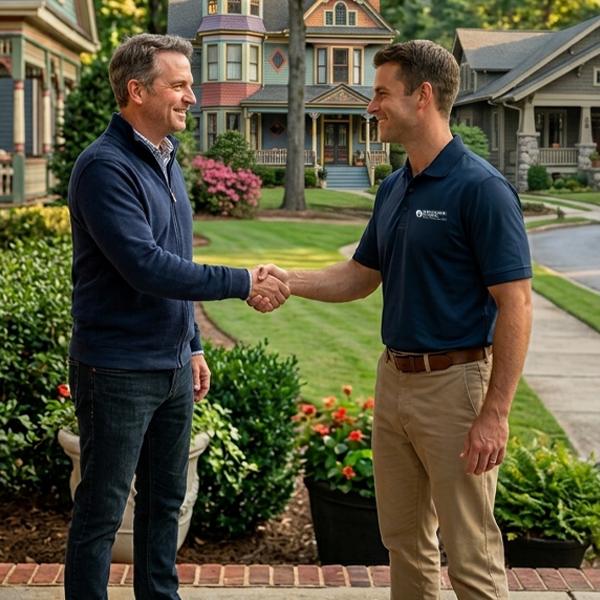 The calls Morningside Plumbing receives most frequently from Inman Park involve sewer lateral failures and root intrusion, cast iron drain line deterioration in homes built before 1960, galvanized supply line replacement in homes that haven't been repiped since a mid-century renovation, water heater failures and tankless conversions, PRV inspection and replacement in homes where the pressure reducing valve has never been serviced, and whole-home repipe when the full picture of a home's infrastructure warrants it.
For condo associations managing shared infrastructure in historic converted buildings, Morningside Plumbing brings both the trenchless technology and the diagnostic patience that properties like these require. The building from the condo project had original cast iron pipes, a sewer line past its useful life, and a driveway worth preserving. The outcome was a new line, an intact driveway, and two residents who described the team as a "pleasure to work with."
The Morningside Care Club provides Inman Park homeowners with the kind of proactive relationship that keeps the situation from reaching crisis before it's addressed. Twice-yearly inspections cover PRV condition, water heater safety and efficiency, supply line integrity, sewer lateral assessment, and drainage performance. For a home where the infrastructure spans multiple generations of materials and methods, that regular assessment is how homeowners stay informed rather than surprised.
We've been working in Atlanta's intown neighborhoods for more than 50 years, including Inman Park, Morningside, Virginia-Highland, Midtown, Ansley Park, Druid Hills, Candler Park, Poncey-Highland, and the surrounding communities. The homes here were built by craftspeople. The plumbing work they need deserves the same approach.
"Our goal has never been to simply sell a repair," Paul Wimpey says. "Our responsibility is to educate homeowners, so they understand the condition of the plumbing systems that serve their homes."
Frequently Asked Questions: Plumbing in Inman Park
Why does plumbing in Inman Park’s oldest homes require a different approach than newer construction?
The Victorian-era homes that define Inman Park predate the plumbing materials most people think of as "old." Galvanized supply lines and cast iron drains are a later era. The oldest homes here were built with wrought iron supply lines, lead joints, and clay tile sewer laterals installed in the 1880s and 1890s — and they use balloon-frame construction, where continuous stud bays run from foundation to roofline without the natural access points that make modern plumbing repairs straightforward. Every repair in a home like this is a puzzle. The plumber you want is one who treats it that way.
Can sewer work be done in Inman Park without damaging mature trees?
In most cases, yes. Under Atlanta's Tree Protection Ordinance, a single 20-inch oak carries a recompense fee of $2,800 if damaged or removed during construction. Traditional excavation along a sewer lateral can trigger tree loss and fees that far exceed the cost of the plumbing work itself. Pipe bursting travels through the existing pipe path beneath the root zone — two small access points, no trench, and the trees above never know the work happened.
How do I know whether my Inman Park sewer line needs lining or full replacement?
You don't, until a camera inspection tells you. A pipe that looks manageable from the outside may be too far deteriorated to accept a liner — which is exactly what the camera revealed on a recent job at a historic Inman Park condo. The line was past the point where CIPP lining was an option, so pipe bursting replaced the full run without excavating the driveway. The diagnosis came first. That's what determined the right answer.
My Inman Park home has been renovated multiple times. How do I know what’s actually down there?
Most Inman Park properties have infrastructure that spans multiple eras — a Victorian-era foundation, a Depression-era sewer lateral, postwar supply lines, and a water heater from a more recent renovation, each on its own timeline and approaching its limits in its own way. A thorough camera inspection of the sewer lateral and a whole-home plumbing assessment will tell you what you're actually working with, rather than waiting for each system to announce itself by failing.
How do I schedule plumbing service in Inman Park?
Call 404.873.1881 or schedule online.
We serve Inman Park, Morningside, Lenox Park, Virginia-Highland, Ansley Park, Midtown, Buckhead, Candler Park, Druid Hills, Poncey-Highland, Chastain Park, Brookhaven, Decatur, Sandy Springs, Dunwoody, and surrounding Atlanta neighborhoods.