
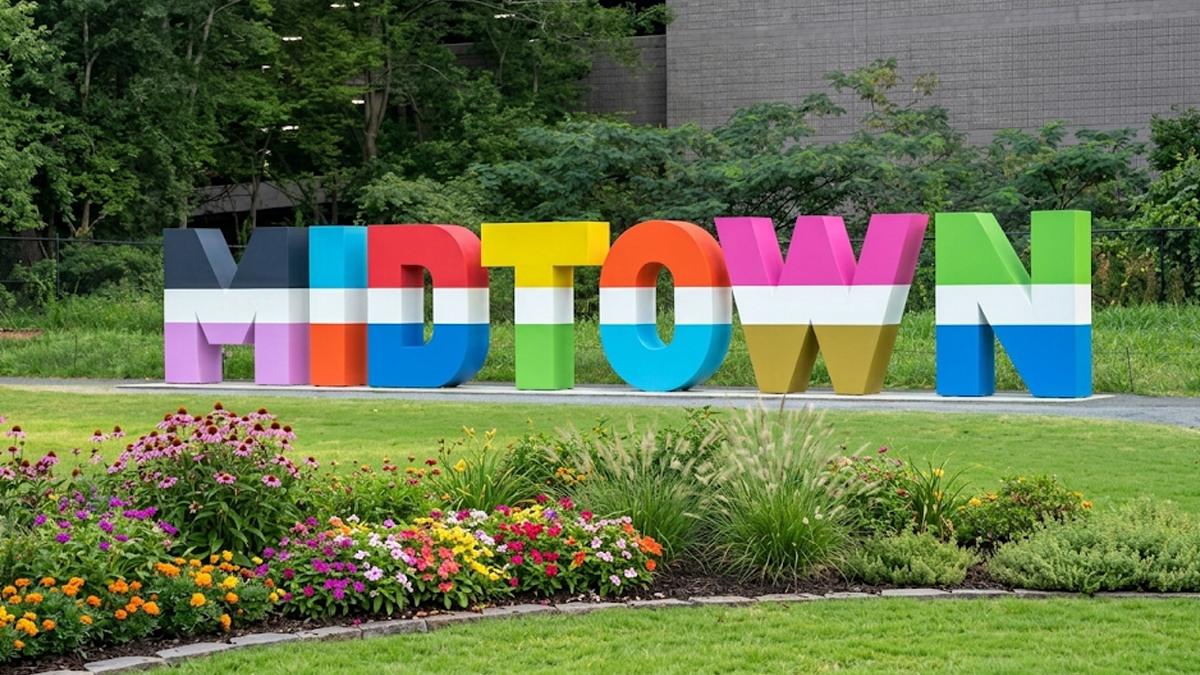
Midtown Atlanta has always moved differently from the neighborhoods that surround it. People arrive for a job, a chapter, a few years of urban living. They fill the Craftsman bungalows along Myrtle Street and the condominiums rising above Peachtree. And then, quite often, they leave.
That transience shapes almost everything about Midtown — including what happens to the plumbing infrastructure beneath it.
As your Midtown Atlanta plumber for more than 50 years, Morningside Plumbing has seen what happens when homeowners, condo owners, and property managers defer maintenance. The calls we receive from this neighborhood follow a pattern we've come to know well: problems that developed slowly, across multiple ownership changes, until the new owner discovered what the previous three had quietly inherited. By then, options have narrowed and costs have risen.
There's a different kind of Midtown customer, though. Paul Wimpey, who has owned and operated Morningside Plumbing for more than two decades, describes them plainly: "We have many customers who have been with us for 25 years or more. Many of those people upgrade the infrastructure of their homes and update their plumbing because they're more aware of the lurking issues."
Those long-term residents — the ones who stay, who plan, who maintain — their homes tell a different story. This post is for anyone who wants to be in that category.
A City With Two Plumbing Worlds
Midtown is, in plumbing terms, two completely different neighborhoods occupying the same geography.
The first is Midtown's historic homes: dense blocks of Craftsman bungalows, American Foursquares, Victorian and Queen Anne homes, and Tudor and Colonial Revival houses built predominantly between 1890 and 1930. These are beautiful homes with century-old infrastructure serving them — aging galvanized steel supply lines, cast iron drain lines, clay tile and Orangeburg sewer laterals that have been in the ground for 60, 70, or 80 years.
The second is Midtown's vertical city: boutique historic condo buildings, mid-rise towers, and modern high-rises where the plumbing infrastructure is shared, complex, and almost entirely invisible to the people who own units within it.
Different systems, different ownership structures, different failure modes. The same underlying problem: aging infrastructure that doesn't announce its condition until it fails.
What’s Underneath Midtown Homes?
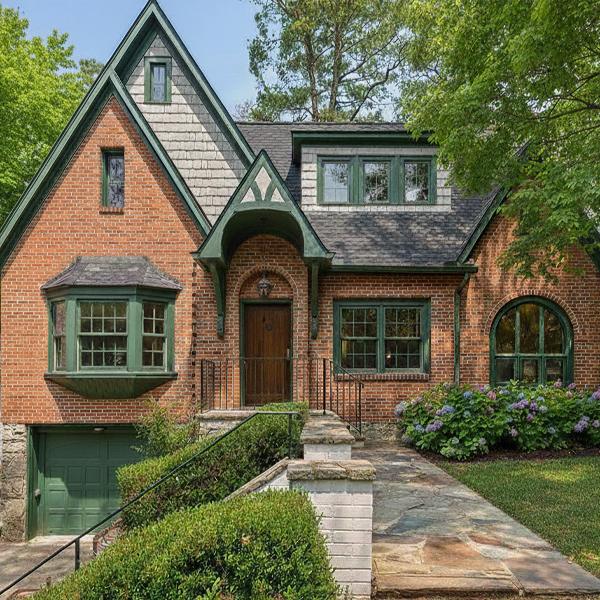
The Midtown's historic homes share many of the same plumbing challenges as Morningside's bungalows — with one important difference. Midtown's lots are narrower (typically 50 by 200 feet), setbacks are tighter, and the balloon-frame construction common in homes of this era creates a specific obstacle for plumbing work.
Unlike the platform framing used in modern construction, balloon framing runs continuous stud bays from the foundation sill to the roof plate with no natural break points between floors. Running modern drain-waste-vent piping or supply lines through these tight, continuous cavities requires cutting through historic plaster, original millwork, or decorative ceilings. There are no convenient access routes. Every repair or upgrade is a surgical operation.
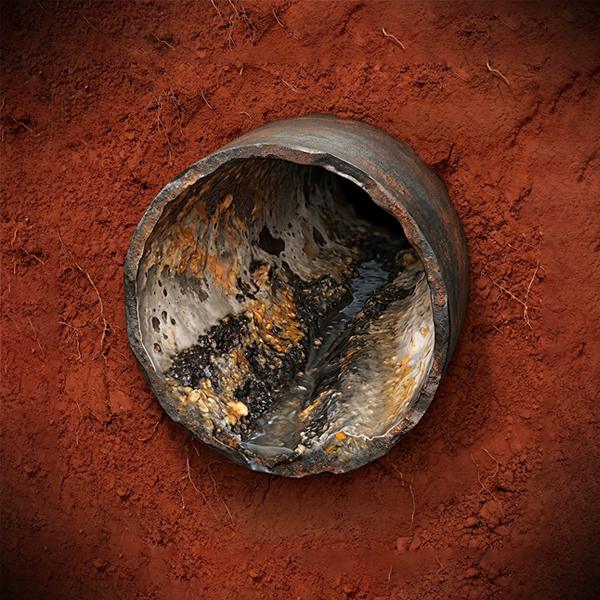
The aging pipe materials are predictable by era. Galvanized steel supply lines, common in homes built before 1960, rust from the inside out. Cast iron drain and waste lines deteriorate from decades of moisture, grease, and chemistry. Clay tile sewer laterals, joined every few feet, loosen and crack over time. Orangeburg pipe — the compressed wood fiber material used in the 1940s through the 1960s — softens and deforms.
Georgia red clay amplifies everything. The soil expands when wet and contracts when dry, exerting seasonal pressure on underground pipes. On a narrow Midtown lot with a 70-year-old clay lateral running directly beneath the only available yard space, that seasonal pressure is unrelenting.
And Midtown's urban tree canopy — the mature oaks and magnolias that shade these blocks — bring their own complication. Tree roots seek water. Aging sewer pipes leak water. That relationship plays out the same way in Midtown that it does in any other intown neighborhood: slowly, invisibly, until the symptoms appear in the form of slow drains at every fixture.
What Midtown Condo Owners Don’t Know
The plumbing systems in Midtown's condominium buildings are fundamentally different from anything a single-family homeowner encounters — and most condo owners don't understand how they work until something goes wrong.
Modern high-rise buildings don't rely on municipal water pressure to reach upper floors. Instead, booster pump systems lift water to the building's top, where it's distributed downward through vertical risers, the large diameter supply lines that run the height of the building and serve every unit on their stack.
This is where the ownership distinction matters — and where most condo owners get surprised.
The shared vertical risers running through common walls and chases are the condominium association's responsibility. The branch lines that split off from those risers and enter individual units, along with the fixtures within each unit, are the individual owner's responsibility. When a leak occurs at the riser, the association owns the repair. When a leak occurs at the branch line or within the unit, the owner does.
The challenge is that these two systems are physically adjacent and visually indistinguishable to anyone who isn't a licensed plumber. An owner who reports a leak may not know — and may not immediately find out — which side of that ownership line the problem falls on. And in older boutique condo buildings where original plumbing has never been updated, the branch lines serving individual units can be aging copper or galvanized steel that's decades past its expected service life.
For condo owners in Midtown, understanding this distinction before a problem develops is the equivalent of knowing your PRV exists before it fails.
What Happens When Nobody Takes Ownership
Paul's observation about Midtown's transience isn't abstract. It has a physical consequence that Morningside Plumbing witnessed firsthand.
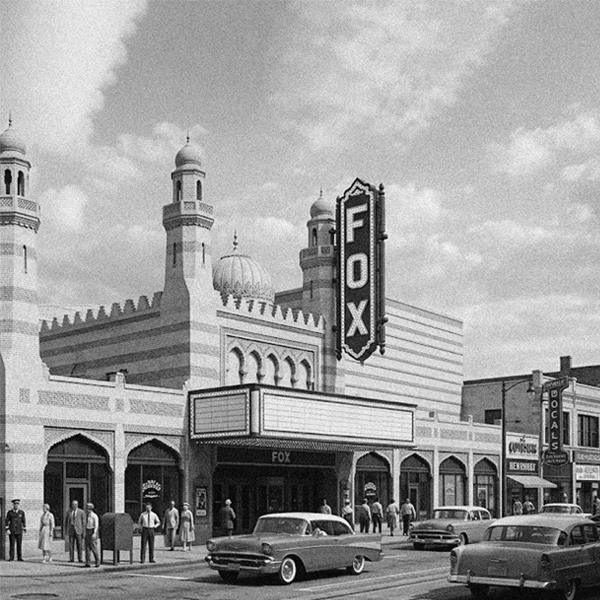
A mid-rise condominium building near the Fox Theatre required a complete repipe. All 535 units. The cause: aging pipes and a pattern of leaks that had been generating repair costs for years — hundreds of thousands of dollars in cumulative damage — before the decision was made to address the root cause rather than continue patching the symptoms.
The project took one year to complete.
The math of deferred maintenance in a multi-unit building is unforgiving. Every year of delayed action is another year of leak events, water damage claims, unit disruption, and emergency repair costs. The building near the Fox Theatre didn't fail overnight. It deteriorated across years of ownership cycles, with each successive association management inheriting the problem and making the calculation that addressing it could wait a little longer.
By the time Morningside Plumbing was called, there was no partial solution. The pipes had to go.
This is the consequence of transience at scale. It's also why the Midtown homeowners and condo owners who establish long-term relationships with their plumber — who know the condition of their systems and maintain them proactively — are the ones who never find themselves on the receiving end of a call like that.
If you're not sure about the condition of your Midtown home's or building's plumbing systems, a camera inspection is the right first step. Call 404.873.1881 or schedule online.
What We Can Do That We Couldn’t Before
For historic homeowners facing sewer lateral replacement, the narrow lots and protected tree canopy that make Midtown's streetscapes beautiful create real constraints for traditional excavation. A trench across a 50-foot lot destroys most of the available yard space. Root intrusion from mature trees means the lateral and the tree are competing for the same soil.
Morningside Plumbing's Underground Arsenal was built for exactly these situations. Pipe bursting replaces the full sewer lateral through two small access points, fracturing the old pipe outward while pulling new, seamless HDPE pipe through behind it. No trench across the yard. No severed tree roots. Under Atlanta's revised Tree Protection Ordinance, protecting those root zones isn't just good practice — damaging a protected tree during excavation carries real financial consequences.
Precision CIPP lining serves a different set of situations: targeted spot repairs on an otherwise sound line, shallow interior pipes under slabs, or sections where full replacement isn't warranted. A video camera inspection determines which approach a given situation actually requires.
For Midtown's historic homes with balloon-frame construction, the trenchless option eliminates one of the most disruptive aspects of sewer work: the excavation that would otherwise require cutting through the limited yard space these narrow lots provide.
Plumbing Services for Midtown Homes and Condominiums
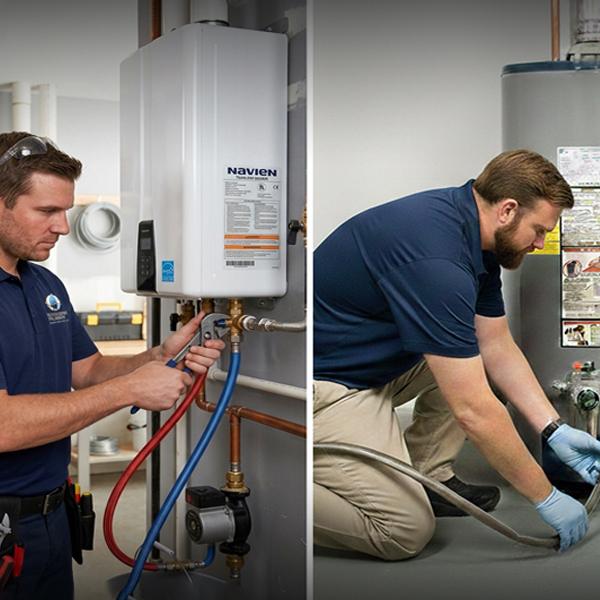
The calls Morningside Plumbing receives most frequently from Midtown involve aging sewer laterals with root intrusion, galvanized supply line failures in older homes, water heater replacements and tankless upgrades in both single-family homes and condo units, condo unit leak diagnosis and repair, and 24/7 emergency response for the burst pipes, sewer backups, and water heater failures that don't wait for business hours.
The Morningside Care Club exists for the Midtown homeowner who wants to be in the category Paul describes — the 25-year customer who knows their system's condition and makes decisions from a position of information rather than crisis. Twice-yearly inspections cover the full scope: water pressure and PRV condition, water heater safety and efficiency, supply line integrity, sewer lateral assessment, and drainage performance. When something is developing, you find out while there's still time to plan.
Midtown's transience means that many properties in this neighborhood have never had that kind of consistent attention. The ones that have look different. They perform differently. And they rarely generate the kind of emergency call that precedes a year-long repipe.
"Our goal has never been to simply sell a repair," Paul says. "Our responsibility is to educate homeowners so they understand the condition of the plumbing systems that serve their homes."
That philosophy has been consistent since 1975. If you're in Midtown — in a bungalow, a boutique condo, or a high-rise tower — we're here.